Every trade costs something, even when it says $0 commission
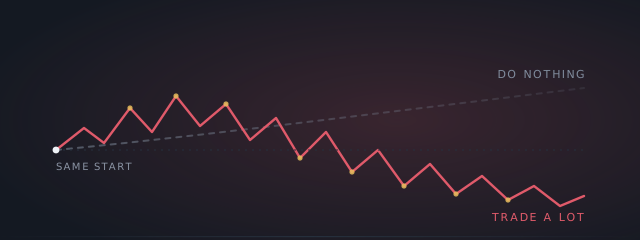
There are two prices at any moment: what buyers will pay and what sellers will take. The gap between them is the spread, and you cross it every time you enter and exit. That is why a position can show red the instant you buy: nothing went wrong, you just paid the spread. On a big, heavily traded name the gap is trivial. On a thin one it is not. Commission-free means the commission is gone, not that trading is free. Trade twenty times a day and you pay that gap forty times.
Leverage does not increase your odds, only your speed
Margin lets you hold more than you put in. It multiplies the gain and the loss identically, and it adds something buying with your own cash never has: a level where the position is closed for you, whether or not you agree. That is a margin call, and it happens at the worst moment by construction: when the price has moved against you. Plenty of people are right about a direction eventually and get liquidated before eventually arrives.
The exit is the trade
Most beginners decide what to buy and give roughly no thought to what would make them sell. So the sell decision gets made later, by whichever feeling is loudest: panic on the way down, greed on the way up. A position with no planned exit is not a trade, it is a mood. Deciding beforehand what would prove you wrong is the single least glamorous habit in this whole subject and the one that separates the people who survive.
The market is very good at looking obvious in hindsight
Every chart you have ever seen of a stock that went up looks like it was screaming. Live, the same chart is ambiguous the whole way, and the moves that felt certain in memory were terrifying at the time. Chasing something that already moved, because it clearly works, is how most people buy the top. Hindsight removes the fear that was the actual experience.
So what does 'safely' actually mean here
It mostly means paying for lessons in something other than money. Learn what a gap through a catalyst feels like, what leverage does to a position you were right about, what your own hands do when you're down: somewhere the loss is fictional. Then size small enough that being wrong is survivable, and decide your exit before you enter. That is not a strategy for beating anyone. It is how you stay in long enough to learn anything at all.
Questions
Frequently asked
Do most day traders really lose money?
The research on real brokerage records has been consistent for decades: the large majority of active individual traders underperform a simple buy-and-hold index over time, and the most frequent traders tend to do worst of all. Regulators in several countries require leveraged-product brokers to publish the share of their retail accounts that lose money, and those disclosures routinely sit well above half.
Is trading the same thing as investing?
They share a screen and almost nothing else. Investing is owning a piece of a business or an index and letting time do the work. Trading is trying to profit from price movement over shorter periods, which means you're competing directly against people whose full-time job, with better data and faster machines, is the other side of your trade.
How much money should I start with?
That depends on your situation. What can be said factually: money in the market can go to zero, leveraged positions can be closed out for you, and any amount you'd need soon is money that will make you trade badly because you can't afford to be wrong.
Can practising on a simulator actually help?
It won't teach you to predict prices: nothing does. What it does teach is the mechanical and emotional part: how orders behave, what a catalyst does to a chart, what liquidation looks like, and how you personally react to being down. Those are real lessons, and a simulator is the only place they are free.