Money Lessons
Short, plain-English lessons on the money and market ideas that actually decide things. No jargon, no lectures. Read one, or learn by doing.
32WRITTEN LESSONS · UNDER 5 MINUTES EACH
Learn by doing
- Guess firstGuess the answer, then see the real math.
- The FeedThe market, one swipe at a time.
- Today's marketToday's prices in four groups, every word one tap from its meaning.
- Your NumberEverything you own, one number. It stays on your phone.
- Live a LifeForty years, one mix at a time.
- The QuantBuild a book of real prices. Outrun my index.
Smart Money Habits
4 LESSONS- Money itselfInflation: why cash in a safe quietly shrinks$10,000 in a safe buys about $5,537 in 20 years. Here's why inflation quietly erodes idle cash, and what actually outpaces it.

- SpendingNeeds vs. wants: the line that decides your spendingTelling needs from wants is the core skill behind every budget. Here's how to draw the line honestly, and why it's harder than it sounds.

- SpendingLifestyle creep: why a raise can leave you no better offLifestyle creep is when spending rises to match income, so a raise leaves you no wealthier. Here's how to catch it and keep the gains.

- ProtectingSpotting scams before they cost youGuaranteed returns, urgency, and pressure to pay in untraceable ways are the classic scam signals. Here's how to recognize them before it's too late.

Investing
10 LESSONS- CompoundingThe cost of waiting: why a few years early changes everythingStarting to invest even a few years earlier can mean a far larger result, because compounding rewards time more than amount. Here's the math.

- FoundationsFree money: take the full employer matchAn employer 401(k) match is an instant, guaranteed return, often 50%, that many people leave on the table. Here's why to grab all of it.

- GrowingWhat's an index fund, and why it usually winsAn index fund buys a sliver of hundreds of companies at once. Over decades it beats most stock-pickers, even the professionals. Here's why.

- The trapsWhen one stock is your whole accountA single position can go to zero for reasons no analysis predicts. Why concentration is the risk you are not paid for, and how correlation hides it.
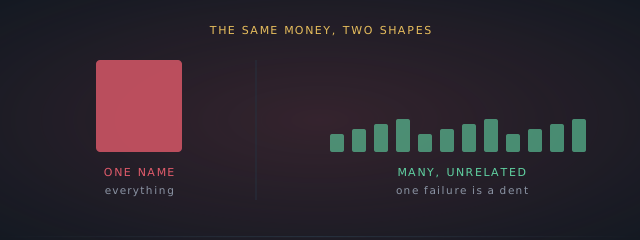
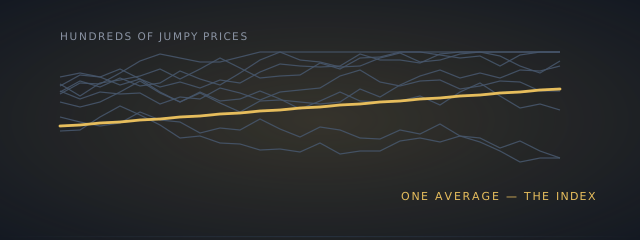
- The marketWhat people mean by “the market”The market is not something you can buy: it is an average. What an index is, why it is calmer than any stock in it, and what the average hides.
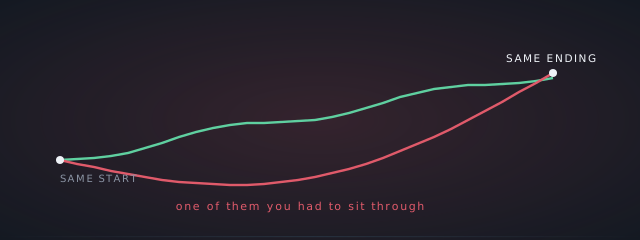
- Staying inRisk is the ride, not just the endingTwo investments can reach the same place by very different roads. Why the size of the swings matters more, and why people quit at the bottom.
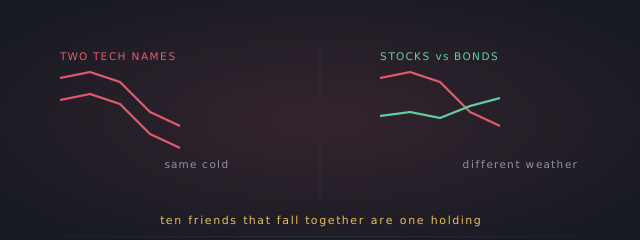
- Staying inFriends that fall togetherAssets that move together are correlated, and ten correlated holdings diversify about as well as one. How to tell real spread from the appearance of it.
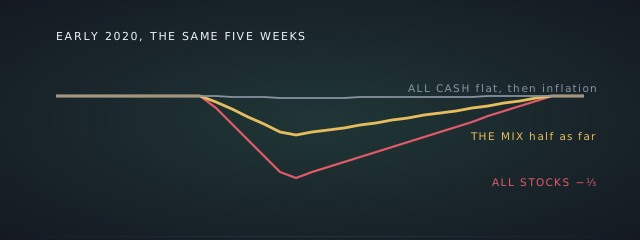
- Staying inThe mix, and what it is actually forA mix does not dodge a crash: it makes one survivable, which is what keeps you present for the recovery. What early 2020 did to three different choices.
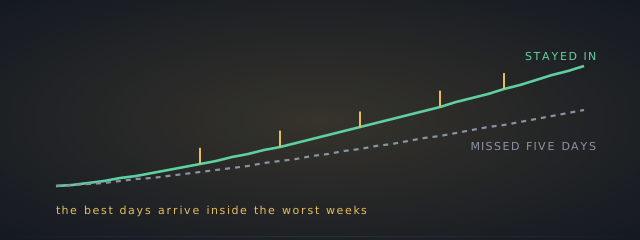
- Staying inWhy the best days hide next to the worstMiss only a handful of the market’s best days over two decades and a large share of the result disappears. The problem is when those days actually happen.
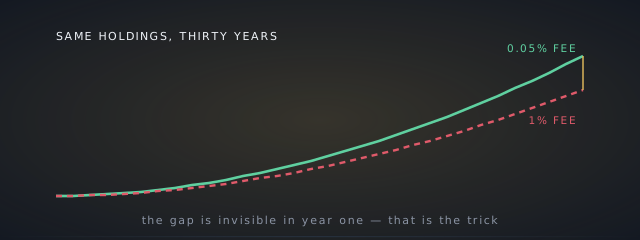
- What it costsWhat you pay to be in itA fund’s yearly fee is taken quietly, from inside, every year, and it compounds against you. Why 1% versus 0.05% is not a small difference over decades.
Foundations
3 LESSONS- FoundationsThe safety net: why an emergency fund comes firstAn emergency fund of 3–6 months of expenses stops a surprise bill from becoming high-interest debt. Here's how much to keep and where.

- Earning & TaxesYour first paycheck: where the money goes before you see itA $60k salary doesn't land as $60k. Taxes, withholding, and benefits come out first. Here's how gross pay becomes take-home pay.

- FoundationsBudgeting 101: where every paycheck should goThe 50/30/20 rule splits take-home pay into needs, wants, and savings. Here's how the simplest budgeting framework works and why it sticks.

Borrowing & Credit
4 LESSONS- BorrowingCredit scores: the number that quietly sets your pricesYour credit score is a number strangers use to decide how much extra to charge you on loans. Here's what moves it and what a low score costs.

- DebtThe debt trap: how high-interest debt compounds against youHigh-interest debt like credit cards compounds against you the same way investing compounds for you. Here's why it's the first thing to kill.

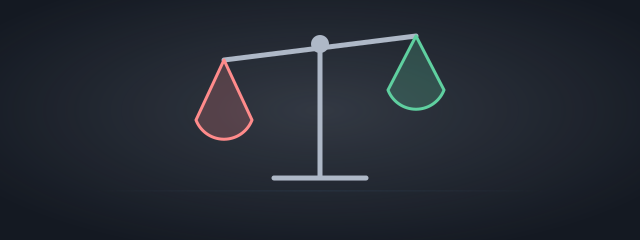
- DebtGood debt, bad debt: the line that decides which is whichSome borrowing builds wealth; some destroys it. The difference is whether the debt buys an appreciating asset at a low rate. Here's how to tell.
- BorrowingStudent loans: when borrowing for a degree actually pays offStudent loans can be worth it, or a trap. It comes down to the loan size versus the earnings boost. Here's how to think about it before borrowing.

Trading Safely
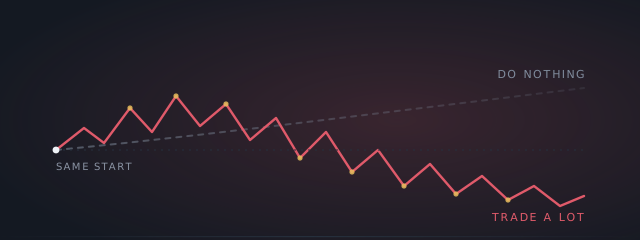
11 LESSONS- The marketWhy most new traders lose moneyMost active traders do worse than if they'd bought an index and done nothing. Here's what actually goes wrong: costs, leverage, and the exit nobody plans.
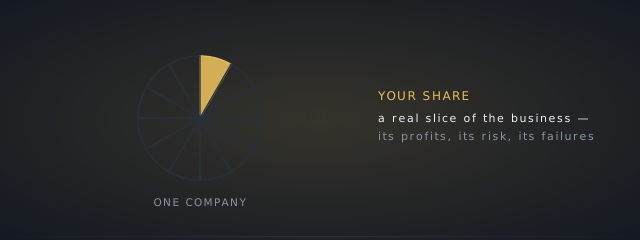
- The marketWhat is a stock, reallyA stock is a slice of ownership in a real company. What that entitles you to, what it does not, and why the price moves without the company changing.
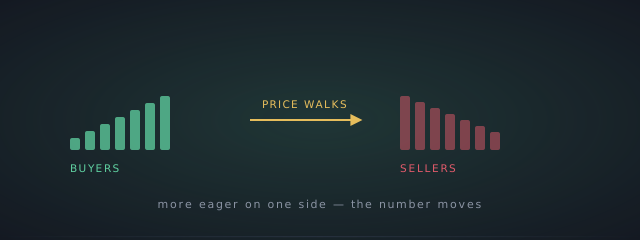
- The marketWhy prices movePrices move when buyers and sellers disagree about the future. Why good news can drop a stock, and why “priced in” explains most of what looks irrational.
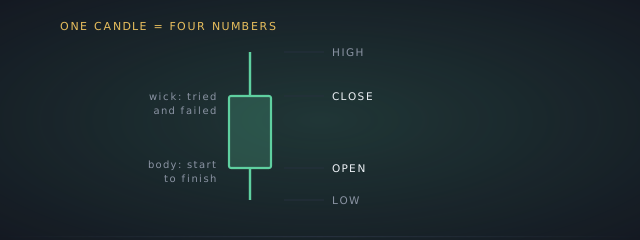
- Reading the screenHow to read a candlestick chartEach candle packs four numbers into one shape: open, high, low, close. Learn the body, the wicks, and what a long wick is actually telling you.
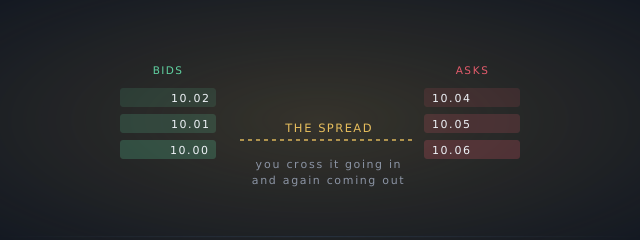
- What it costsThe spread: why you start every trade behindThere are always two prices, and you cross the gap twice per round trip. Why commission-free is not free, and where the spread gets expensive.
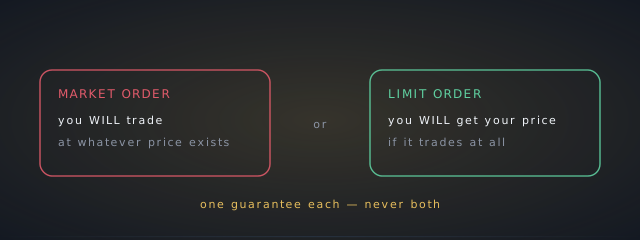
- What it costsMarket order vs limit orderA market order guarantees you trade. A limit order guarantees your price. You cannot have both, and picking the wrong one is a common first mistake.
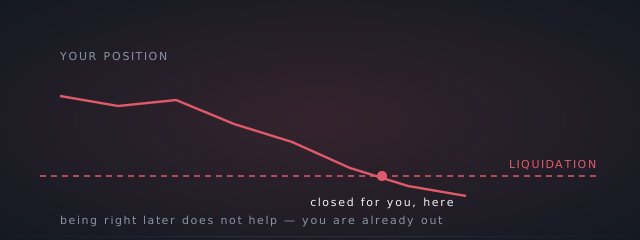
- The trapsMargin, leverage, and the call you cannot argue withBorrowing to trade multiplies gains and losses identically, and adds a level where the position is closed for you, whether or not you still believe in it.
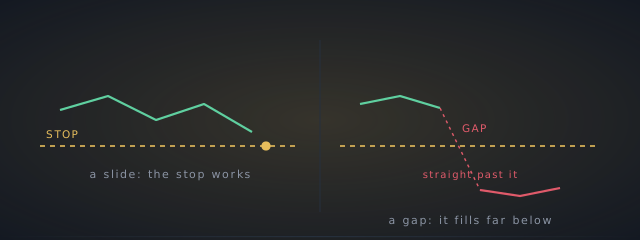
- The trapsThe stop-loss, and why the exit is the tradeA stop-loss decides your exit while you are calm, not while you are losing. How stops work, how they fail in a gap, and where people misplace them.
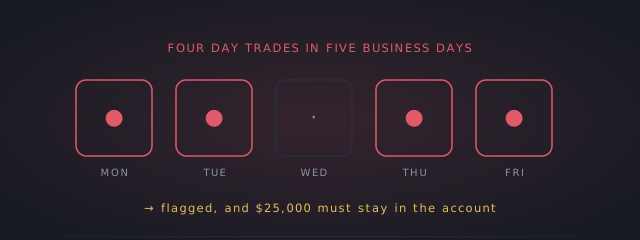
- The trapsThe pattern day trader rule, and what replaced itThe $25,000 pattern day trader rule ended on June 4, 2026. What it was, what FINRA's intraday margin rules ask now, and what still catches beginners.
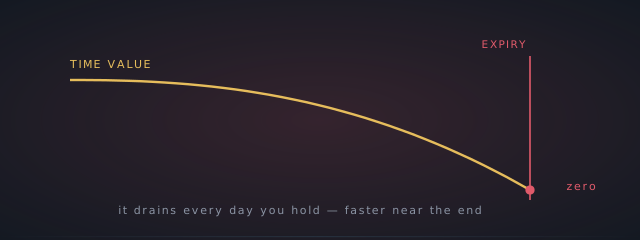
- The trapsOptions, and why "cheap" is the trapAn option is a bet with a deadline. Why being right about direction still loses money, what time decay does, and why the cheapest contracts are cheap.
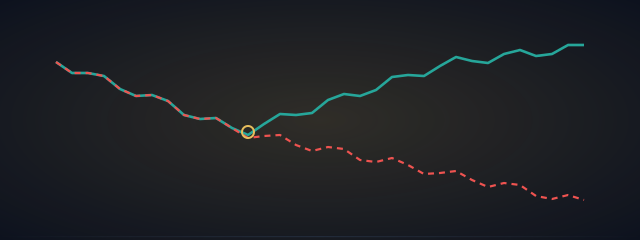
- The phraseBuy the dip: the oldest idea on the tapeBuying the dip means buying after a price falls, betting it recovers. It works on things that bounce back and fails on things that keep falling.
Teaching this? See the teacher guide and the standards alignment.
Buy the Dip: the stock market game for iPhone.

45-second trading days: catch the dip, ride the rip, climb the Daily leaderboard. Free, no ads.
Download on the App Store