The same weather hits the same crops
Two technology companies can be genuinely different businesses with different customers and different products, and when a scare hits their industry, both fall anyway. Sector, geography, size and business model all create these links. The companies do not need anything in common except exposure to whatever just happened.
Ten correlated holdings behave like about one
This is the practical consequence and it surprises people who count tickers. If everything you own responds to the same shock in the same direction, owning more of them barely reduces the swing. The diversification benefit comes from difference, not from quantity, and the count on your screen measures the wrong thing.
Different weather, different friends
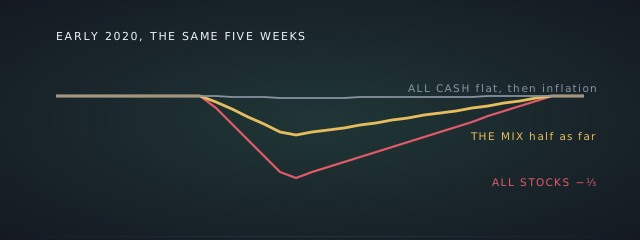
Now consider a pair that often behaves differently: stocks and government bonds. A bond is a loan you make in exchange for steady interest. In many storms, when stocks fall, bonds hold steady or rise, because frightened money moves toward predictable income. That is a genuinely different response to the same event, which is what diversification is made of.
Correlation is not a constant
The important caveat: these relationships shift, and they have an unhelpful habit of tightening in a crisis. In a severe enough panic, things that normally move independently can fall together as people sell whatever they can. Diversification reduces ordinary risk reliably and extreme risk only partially, and expecting more from it than that is how people are surprised twice.
Questions
Frequently asked
What does correlated mean?
That two things tend to move in the same direction at the same time. Highly correlated holdings rise and fall together, so holding several of them gives you far less spread than the number suggests.
Is correlation the same as causation?
No. Two prices moving together does not mean one moves the other; often both are answering the same cause, such as interest rates or the economy. That shared cause is exactly why correlated holdings tend to fall at the same time.
Do bonds always rise when stocks fall?
No. It is a tendency, not a rule, and there have been periods where both fell together: notably when rising interest rates hurt each of them at once.