All stocks: the ride is real
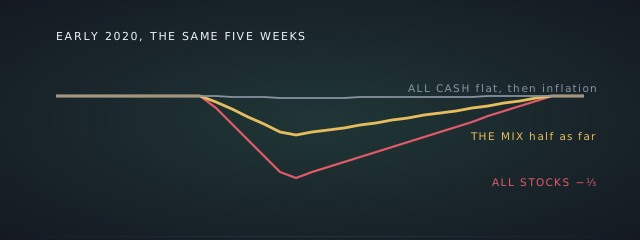
Broad US stocks fell roughly a third in about five weeks as the world shut down. That is not a malfunction: it is what stocks periodically do, and anyone holding them should expect a drop of that order more than once in an investing lifetime. The people who did fine were the ones still holding at the bottom, which is a statement about temperament rather than analysis.
All cash: safety has a price too
Cash felt nothing during those five weeks, which is exactly its appeal. It then sat through the years afterwards losing purchasing power to inflation and missing the recovery entirely. Avoiding the visible risk meant accepting the invisible one, and over long horizons the invisible one compounds too.
The mix: half the fall, sooner back
A spread of stocks, bonds, some gold and some cash fell about half as far and recovered sooner. It did not predict anything and it did not dodge the storm. It made the storm survivable, and survivable is the whole product, because the owner who is still invested is the one present when things turn.
It will never be the best-performing thing you own
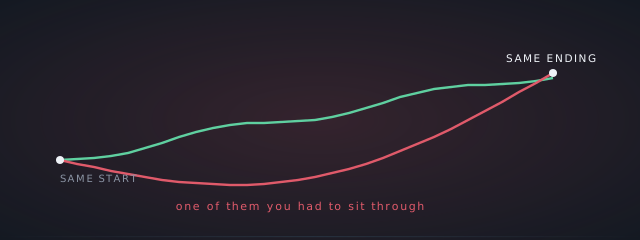
This is the part people find hard. In any given year something in the mix will be lagging badly and it will feel like dead weight: that is the diversification working, not failing. A mix never wins a sprint. It is built to keep finishing marathons, and the cost of that is permanently owning something that is currently disappointing you.
Guess first
The crash year arrives.
Single companies fall 45%, index funds 32%; gold rises 12%, cash holds at +1%. A mix of 60% index, 10% single, 10% gold, 20% cash falls how far?
0.6 × (−32) + 0.1 × (−45) + 0.1 × (+12) + 0.2 × (+1) = −22.3%. The same weather Live a Life schedules.
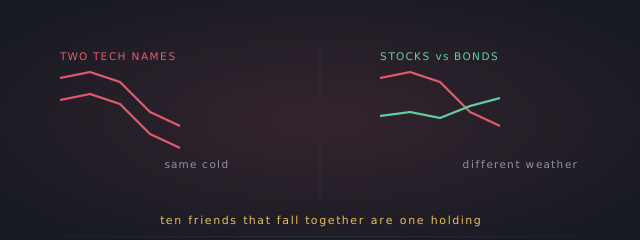
Different things fell different amounts, and two of them did not fall. That is the entire idea of a mix. All eight in Guess first
Questions
Frequently asked
What is asset allocation?
How your money is divided between different kinds of assets: stocks, bonds, cash, and sometimes commodities or property. It generally drives more of your experience than which specific holdings you pick.
Does diversification prevent losses?
No. It reduces how far you fall and how long recovery takes. In a severe enough panic most things fall together, and the benefit is a matter of degree rather than immunity.
Is holding cash a mistake?
Cash serves real purposes: an emergency fund and money you need soon should not be exposed to a market drop. The cost appears when large amounts sit for many years, where inflation quietly erodes it.