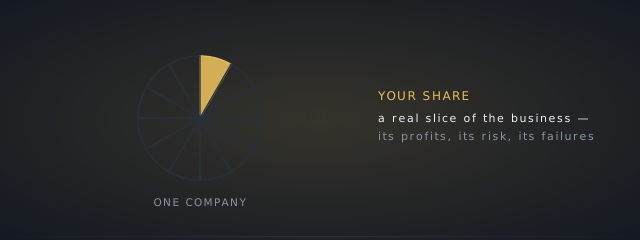
What you actually get
Two things, mostly. A claim on a fraction of the company’s future profits: sometimes paid out directly as a dividend, more often reinvested in the hope of making the whole thing worth more. And a vote, proportional to how much you hold, which for anyone reading this is a rounding error. What you do not get is any say in how the company is run, any access to its cash, or any guarantee whatsoever.
Where the shares come from
A company sells shares to raise money, to build a factory, hire people, pay earlier investors. After that first sale, it is done: the shares trade between investors, and the company gets nothing further from you buying one. The price you see all day is other people trading with each other about a business that is off doing its own thing.
So why does the price move every second?
Because the price is not the company’s value. It is what the most eager buyer and the most willing seller agreed on, most recently. Expectations shift, someone needs cash, a rumour lands, and the number moves while the factory carries on exactly as it was. Over years the price tends to follow how the business actually does. Over an afternoon it follows mood.
Can it go to zero?
Yes. Shareholders are last in line: if a company fails, lenders, suppliers and staff get paid from whatever is left, and equity holders get what remains, which is often nothing. This is not a rare theoretical event: companies go under regularly. It is the reason a share can pay more than a savings account, and the reason it might pay nothing at all.
Questions
Frequently asked
Do I own part of the company if I buy one share?
Yes, legally: a proportional slice, including a claim on profits and a vote. With one share out of hundreds of millions, that slice is very small, but it is real ownership rather than a bet on a number.
Does the company get my money when I buy its stock?
Almost never. Unless you are buying in a new issue, you are buying from another investor. The company received its money when the shares were first sold and is not part of your transaction.
What is the difference between a stock and a share?
In everyday use, none worth worrying about. "Stock" usually means the asset class or a company’s equity in general; "share" means one unit of it. People use both interchangeably.