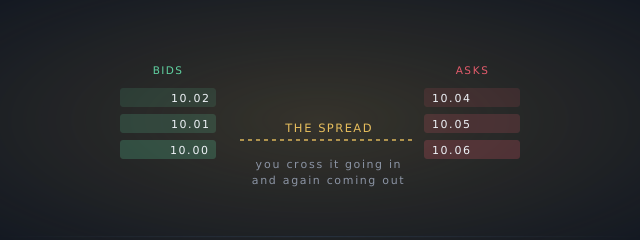
There are always two prices
The bid is the highest price someone will currently pay. The ask is the lowest price someone will currently accept. They are never the same number, and the gap between them is the spread. Buy at the ask, and to get out immediately you would have to sell at the bid: a little lower. That difference is why your position opens red.
Who collects it, and why it exists
Market makers quote both sides continuously and earn the gap in exchange for always being there to trade with. That is a genuine service: without it you would have to wait for a person who wanted exactly the opposite of your trade at the same moment. The spread is the fee for instant liquidity, and you pay it whether or not you notice.
Commission-free is not free
When a broker charges no commission it has not removed this cost, because this cost was never the commission. Round trips still cross the spread twice: once in, once out. On a heavily traded large company the gap is often a cent and effectively irrelevant. On a thinly traded small one it can be a meaningful percentage, and on an illiquid options contract it can be brutal. Trade rarely and it is noise. Trade twenty times a day and it is the dominant term in your results.
When it gets worse
Spreads widen exactly when you least want them to: at the open and the close, around news, in fast markets, and in anything thinly traded. This is also when beginners feel most compelled to act. A market order placed into a violent minute can fill considerably further from the last price you saw than you expected, which is where limit orders come in.
Questions
Frequently asked
Why is my stock already down right after buying?
You almost certainly bought at the ask and are now being valued at the bid. The price has not moved against you; you are seeing the spread. It closes as soon as the price rises by that gap.
How do I pay less spread?
Trade liquid things, avoid the most chaotic minutes, use limit orders where it matters, and trade less often. Each round trip pays it again, so frequency multiplies the cost directly.
Is the spread the same as a commission?
No. A commission is a stated fee your broker charges. The spread is built into the prices themselves and is charged even by brokers advertising zero commission.