The cost of missing a handful of days
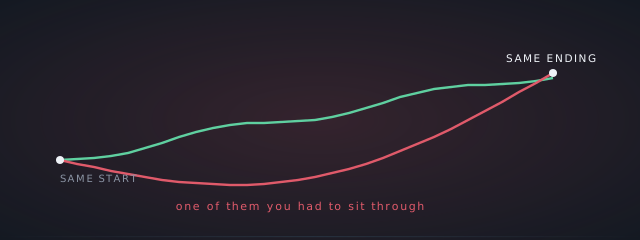
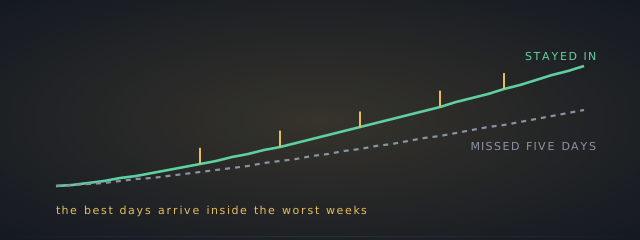
Take two people invested in the same index over the same twenty years. One holds throughout, including every frightening headline. The other steps out when things look dangerous and misses only the five best days of the entire period. That is five days out of roughly five thousand, and it removes a large fraction of the final result, in the version this site animates, over a third.
Why those days are unavoidable in practice
Enormous up days do not arrive during calm markets. They cluster in the middle of crashes, often within days of the biggest falls, because that is when fear is highest and any relief produces a violent bounce. To capture them you must be invested at precisely the moment every instinct is telling you to leave. Nobody rings a bell.
Timing requires being right twice
This is the part that gets skipped. Getting out is one decision; getting back in is another, and the second is much harder because you are buying into something that just hurt you, with no signal that the worst is over. Plenty of people exit successfully and then spend the entire recovery waiting for a better entry that never visibly arrives.
What this does not say
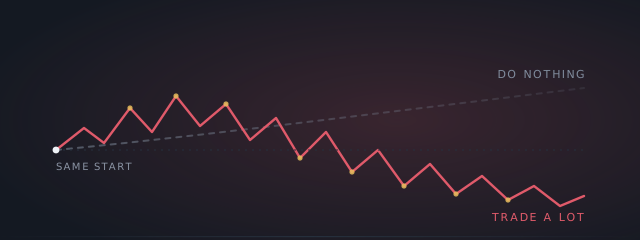
It is not an argument that markets always recover promptly, or that any particular index must rise: individual markets have gone nowhere for very long stretches. It is a narrower and better-supported point: attempting to step in and out based on how things feel has historically cost more than it saved, because the timing of the good days defeats it.
Questions
Frequently asked
Should I sell when a crash starts?
The record shows that the largest single-day gains cluster close to the largest falls, so leaving during the fall has frequently meant missing the rebound as well.
Is dollar-cost averaging a form of timing?
It is closer to the opposite: investing on a fixed schedule regardless of conditions removes the decision entirely, which is much of its appeal for people who know they react badly to volatility.
Does this apply to individual stocks?
Less reliably. The argument rests on a broad index recovering because the economy behind it does. A single company can fall and never recover, because it can simply fail.