What the phrase actually claims
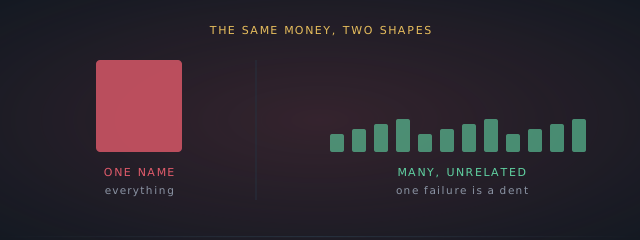
Buying the dip rests on one assumption: that whatever fell is still worth more than its new price. For a broad market index that has recovered from every past fall, the assumption has a long record behind it. For a single company, a single coin or anything whose story just changed, it is a guess, and the fall itself may be the market correctly pricing in bad news.
When it tends to work
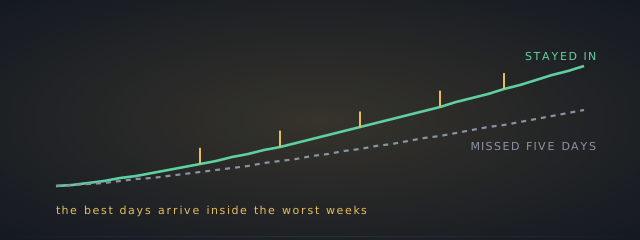
Dips inside a rising trend, dips caused by a scare that turns out to be nothing, and dips in things that cannot easily go to zero. A market that sells off for a week on a headline and then carries on is the textbook case. So is a quiet price that briefly flushes lower on a burst of selling and snaps back within minutes: the fall was about who was selling, not about what the thing was worth.
When it fails: catching a falling knife
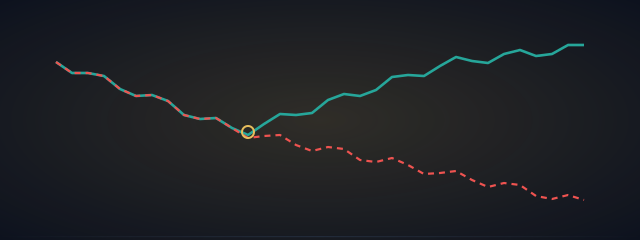
The other side of the phrase is the falling knife: buying something that is falling because it is getting worse. Each bounce looks like the bottom, each purchase averages the price down, and the position grows as the thing shrinks. The dips that fail are usually the ones with a reason behind them, a broken business, a collapsed story, a leveraged market being forced to sell, and they look exactly like the ones that work until they do not.
The habits of people who survive it
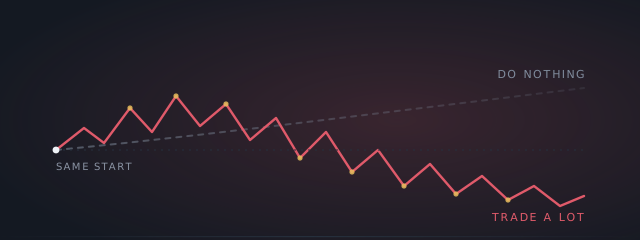
They decide the size before the dip, not during it, so one bad call cannot sink them. They know what would prove them wrong and sell when it happens instead of buying more. They spread purchases over time rather than betting everything on one bottom. And they keep the phrase for things that have a reason to come back, not for anything that simply went down.
Questions
Frequently asked
Is buying the dip a good strategy?
The record is kinder to buying dips in broad, diversified markets over long periods than to buying dips in single stocks or coins, where a fall can be the start of a collapse rather than a discount.
What is the difference between buying the dip and catching a falling knife?
Only hindsight separates them. A dip is a fall that recovers; a falling knife is a fall that keeps going. The practical difference lies in sizing and in knowing in advance what would make you sell.
Does buying the dip work in crypto?
The same logic applies with more violence. Crypto prices swing further in both directions, so dips are deeper and more frequent, and so are the ones that never come back.