An index is one number for a herd
Take the 500 largest US companies, weight them by size, and average the lot. That average is an index, and the one you have heard of is the S&P 500. Others track different herds: smaller companies, whole countries, single sectors. None of them is a company. You cannot buy an index itself, only a fund that tries to hold what it holds.
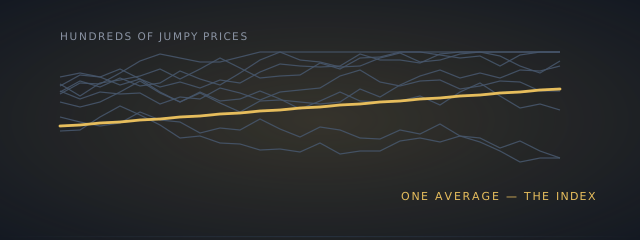
Averaging is the entire point
One company can crash on its own news and drag nothing else with it. For the herd to move meaningfully, something has to touch everyone at once: rates, a recession, a shock. That is why an index is dramatically calmer than the companies inside it, and why "the market fell 2%" is a much bigger event than one stock falling 2%.
What the average hides
A flat index can conceal a violent day underneath, with half the herd up and half down. And because most indexes weight by company size, the largest few names can move the number while the other hundreds do very little. When a handful of enormous companies dominate an index, "the market" is quietly reporting on them more than on the average business.
Why it matters to you
It is the yardstick. When someone says an investment beat or lagged the market, they mean it against an index like this one, and it is the benchmark most active traders and professional funds fail to beat over long periods. Knowing what the number is an average of tells you what you are actually being compared to.
Questions
Frequently asked
What is the S&P 500?
An index tracking roughly the 500 largest US public companies, weighted by market size. It is used as shorthand for "the US stock market" because it covers a large share of total US company value.
Can I buy the stock market?
Not directly: an index is a calculation, not an asset. You can buy a fund that holds the same companies in the same proportions, which is what an index fund does.
Why is the index calmer than individual stocks?
Because individual company news mostly cancels out across hundreds of holdings. Only events touching everyone move the whole average, which happens far less often.