The expense ratio is charged from inside
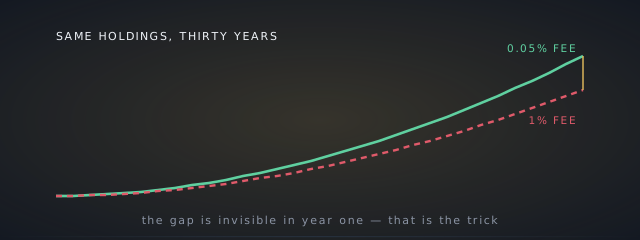
A fund’s annual fee is called its expense ratio, and it is not billed to you: it is deducted from the fund’s assets continuously. No line item appears, no payment leaves your account, and the performance you see is already net of it. That invisibility is the whole reason a percentage point can persist for decades without attracting attention.
Fees compound too, in the wrong direction
This is the part that makes the numbers surprising. A fee does not just remove this year’s slice: it removes that slice’s future growth as well, and next year’s, and so on. The same compounding that makes long-term investing powerful works identically on what you pay. Over thirty years a 1% annual fee typically consumes something close to a quarter of the final total.
The other costs, briefly
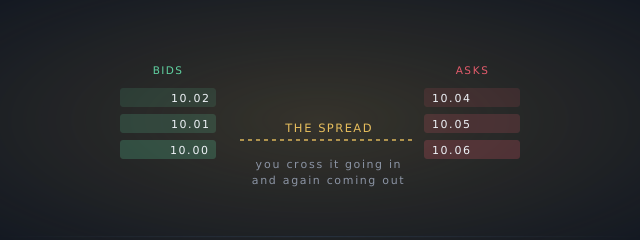
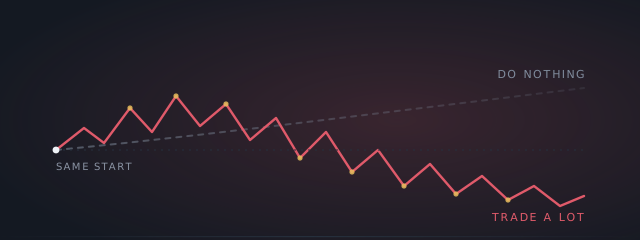
The expense ratio is not the only drag. Trading costs the spread every time you enter and exit. Frequent trading in a taxable account can convert long-term gains into short-term ones taxed at higher rates. Currency conversion, platform charges and account fees each take a small, permanent bite. None is dramatic alone; the point is that they are permanent and they stack.
The one thing here you control
You cannot control what the market does. You can control almost exactly what you pay to participate, and it is one of the very few inputs in investing that is knowable in advance rather than a forecast. That asymmetry is why fees get more attention from people who have done this a long time than from people who are just starting.
Guess first
The fund charges 1% a year.
Same $100 a month, thirty years, 7% market average, but a 1% annual fee quietly makes it 6%. What does that one percent cost you by the end?
At 7%: $121,997. At 6% net of the fee: $100,452. The fee’s bill: $21,546 · about 18% of the whole pile.
A one looks small. Thirty compounded ones are a fifth of everything. All eight in Guess first
Questions
Frequently asked
What is an expense ratio?
A fund’s annual cost as a percentage of the money you have in it, deducted continuously from inside the fund. A 0.05% ratio costs about $5 a year per $10,000; a 1% ratio costs about $100.
Is a more expensive fund better?
Cost does not reliably predict performance, and higher-fee active funds have on average underperformed cheap index funds over long periods after those fees. The fee is certain; the outperformance is not.
Does commission-free mean no costs?
No. It means no stated commission. You still cross the bid-ask spread on every trade, and any fund you hold still charges its expense ratio.